Menu
1963 “Aiko Yochien” kindergarten alumni meeting, Nakashibetsu, Japan (David in white shirt).
Growing up in Japan
My father grew up on an Amish farm without electricity, using horses for farming and transportation. He left the Amish faith in his 20s and joined the Mennonite faith. He met my mother at Goshen Mennonite College, Indiana, who was studying to be a nurse. They both felt called to the foreign missions. When my brother Dan was one year old, they were sent to Japan under the Mennonite mission in 1951.
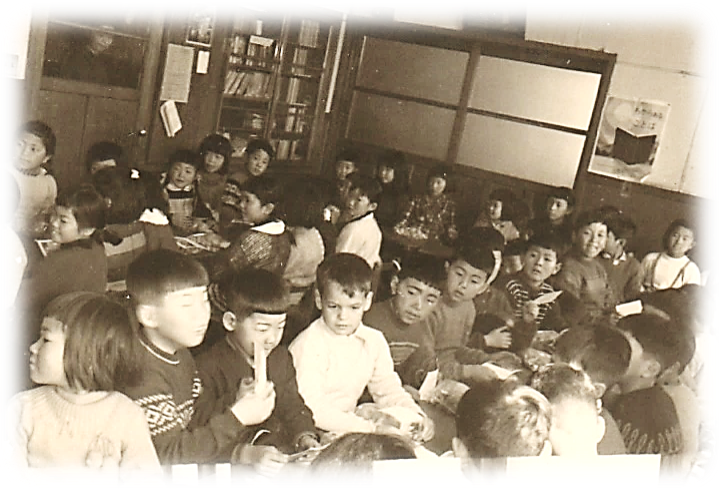
They studied Japanese language for two years in Tokyo, where my older sister was born. Later, they were assigned to the town of Nakashibetsu on the northern island of Hokkaido, Japan. They built a church and started a kindergarten as a way to reach the parents. I was born in Nakashibetsu in 1955.
WhenI was around 3, my younger brother drowned in a pond in our backyard. I was told I was very close to my younger brother, and I kept asking where he went.Perhaps because of this loss, my parents adopted a Japanese baby who became my younger brother.
My aunt (my mother’s sister) was a nurse at Holt’s Orphanage in Korea. In 1961, my parents adopted a 1-year-old Korean orphan, who became my younger sister. As a side note, many years later in life, after I joined the Unification Church, my aunt told me that when she was living in Korea that her maid was a Unification Church member. I have to wonder how God had prepared our parents’ generation to meet True Father, if only Christianity had accepted Him.
Besides church mission work, my father visited local farmers and took them goods donated by churches in the United States. This was after WWII, and rural Japan was still poor. I mention this because much later in life, when I was living in Panama, I worked as an interpreter for a Japanese coffee distributor who came to Panama to buy coffee. It turns out that when he was young, this man had accompanied his father, who was a boiler repairer, to visit farmers in the Nakashibetsu area to repair their boilers. He had heard about a foreign missionary who was helping the farmers and was always impressed by that. He was quite surprised to discover that I was that missionary’s son!
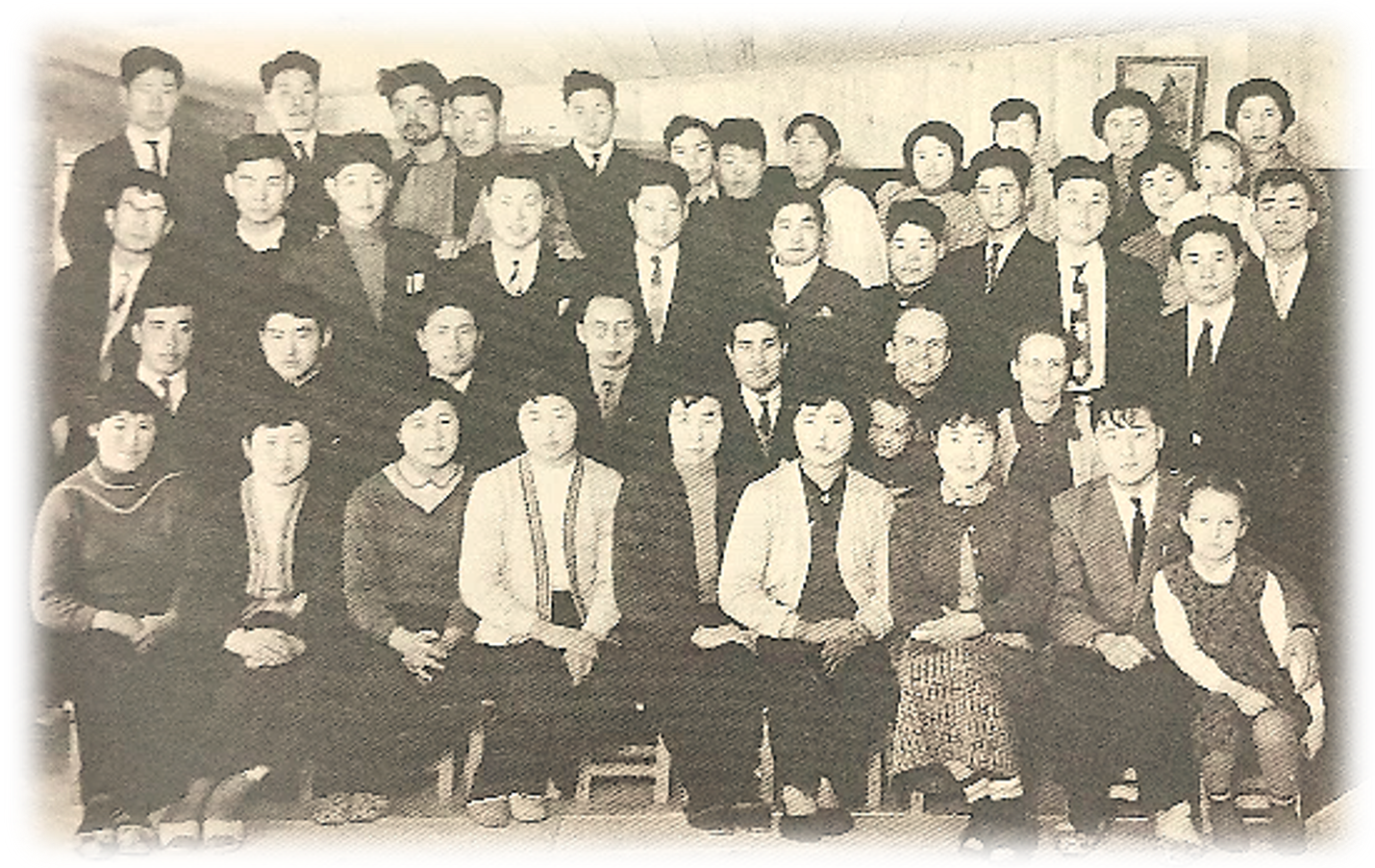
On another side note, when my parents were missionaries in Nakashibetsu, my father was asked by local Japanese authorities if he could help teach the farmers how to farm, since my Dad was a farmer. After the war, they were adopting US farming practices building silos, etc. on a pilot farm project in Hokkaido. My Dad consulted the mission department, but they told him to focus on spiritual work. I have to think, how different things may have been for the mission work in Hokkaido if they had been able to teach practical skills as well as spiritual salvation.
When I was in first grade in the local Japanese elementary school, my parents moved back to the US on furlough. I went to 2nd and 3rd grade in the US. In second grade, the teacher once showed the class a picture of Jesus and talked about Jesus’ crucifixion. But I had a strong spiritual feeling that Jesus wasn’t meant to die, and I began to cry. I never understood why until later in life when I learned the Diving Principle.
Our family moved back to Japan in 1965, where we lived in Tokyo for 1 year. I went to a Japanese public school again, but had forgotten all my Japanese, so I went one year back to the 3rd grade.
In the summer of 1966, we moved back to Hokkaido to the town of Furano, where I graduated from the local Japanese elementary school. Myself and my younger siblings took correspondence English courses at home to keep up our English studies. I went to English-speaking mission schools in Sapporo and later Tokyo, living in their dormitories for junior and senior high school.
I mention my schooling because as I entered adolescence, I began to struggle with my identity. I couldn’t fit in the Japanese community, and in America, I was also an oddball, missionary kid.
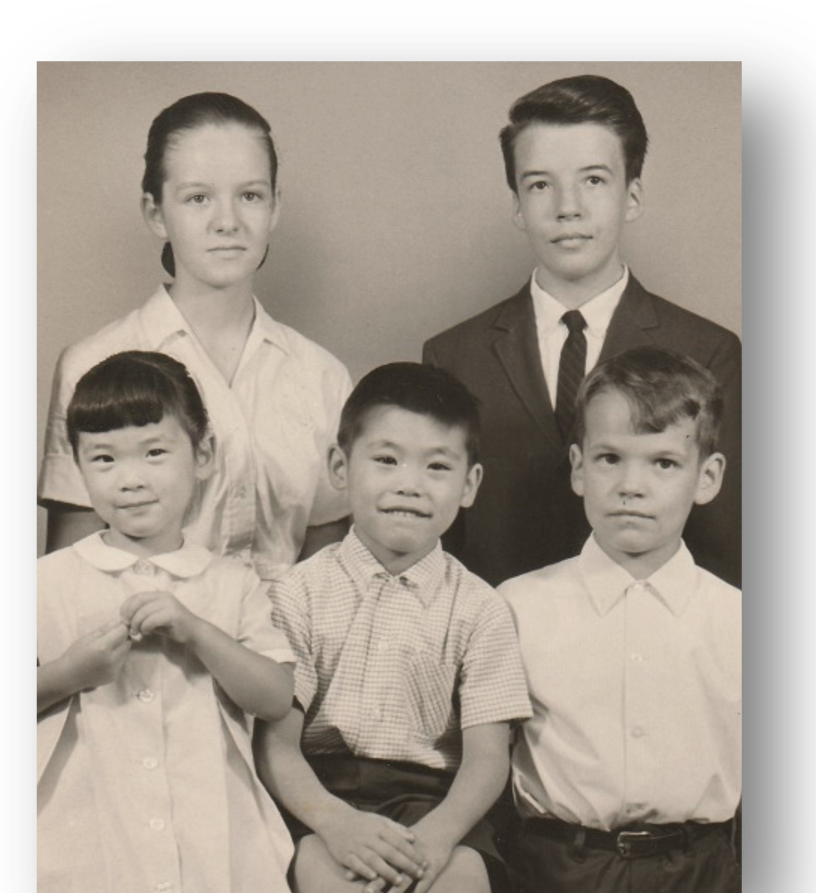
As a child, my friends were Japanese, but it was pressed on my mind that they were not Christian and needed salvation. Later in the mission schools, I found that my American schoolmates were not any better, or even worse in terms of character, than my former Japanese friends, yet they were supposedly saved. I questioned in my mind how this was fair of a loving God. So, I developed questions about my faith, though I loved Jesus and used to speak to Him as a young child.
Spiritual search back in the US
My parents moved back to the US permanently in 1973. I went to Harrisonburg Mennonite College in Virginia for 1 year. This was the last year that our family lived together. I took an Old Testament course at college, hoping it would enlighten my understanding of the Bible; instead, it shattered my faith because of the explanation of the human element in writing the Bible. I became agnostic and dropped out of college.
I studied other religions and read the Book of Mormon, the Koran, and studied Buddhism. Later, I went on a Mennonite Exchange program where I lived and worked on a dairy farm in Holland for 1 year. During one vacation, I visited the Francis Schaeffer L’Abri Christian community in Switzerland, but found no spiritual answers I was seeking. Whatever religious group I visited, I felt people were just following their leader, who had the same fallen natures as everyone else. I couldn’t find God.
After returning to the States from Japan, my Dad didn’t want to be financially dependent on the church anymore and bought a restaurant in Fairfax, VA. I worked there supporting them for 2 years. He also worked with a Japanese church in Washington, D.C. I faithfully went to church with my parents, but their faith did not answer my spiritual search.
In the summer of 1976, I remember reading in the Washington Post about Rev. Moon’s Bicentennial rally held at the Washington Monument. I just thought he was another fanatic pastor that the papers portrayed him to be.
I told my parents that I would leave home in the summer of 1977. I was training myself by riding my bicycle 10 or 20 miles a day. I left home on my bicycle, headed for San Francisco, where my older brother was living.
After about 2 months biking and camping my way west. I was in Banff National Park in the Canadian Rockies and parked my bike and hiked up a trail. I had a small New Testament Bible with me and read it again. I had a spiritual experience where the words of Jesus struck my heart deeply. I repented for having lost faith in Him and accepted Jesus into my life again. I felt I should become a disciple preaching the Word like the early disciples. But I was too weak spiritually to be able to do that.
I visited a random church one Sunday, but could not connect with anyone. I reached San Francisco and lived with my brother for a while. Later, he said I should get my own place. So, I found my own apartment. I was working as a bike messenger for a company that delivered packages, documents, etc. by bicycle to businesses in San Francisco.
Meeting the Unification Church
In May 1978, I met my spiritual parents, Leslie, who later left the church, and Jonathan Gullery, a New Zealander, on Market Street. They invited me to an international community gathering. I was interested and told my older brother Dan. He said those are the Moonies and to be careful because they will make you join. I said OK, but wanted to check them out.
I should mention that at this point in life, I was at the end of my rope. My family gave me no answers to my questions in life; my spiritual search was a dead end. Jesus and Christianity I believed in again did not provide me with solutions as to who I was. I admired people who grew up in another culture and took it in their stride, getting on with their lives. I couldn’t - I was stuck not knowing what the answer was to my spiritual dilemma and my conflict between Japanese and Western cultural differences. I was contemplating suicide because I had no purpose in life anymore.
I went to an evening lecture in San Francisco and then to a weekend workshop at the Booneville farm. Afterwards, I told my spiritual Dad that this was a nice truth, but just one of many, and was preparing to leave. His cajoling me had no effect. He asked me to talk with another sister. She really pulled on my heart strings, saying how important this was, etc. So, I yielded to her request and paid the $50 for the 7-day workshop. The Principle of Creation was nice, but the Fall of Man made sense since I had struggled with sexual desire, even though I kept my purity. Also, the parallels of history were fascinating.
The Divine Principle answered all the questions I had about Christianity. It fit my hand like a glove. There were no questions or doubts anymore in my mind. Father digests both eastern and western cultures, and learning Father’s course sealed my faith in True Father as the Messiah at the Second Coming. The truth of Father’s teaching is powerful, but I only realized afterwards that what I had been seeking all along in my life was true love. Father’s true love for me, felt through brothers and sisters, was what captivated me and made me stay and listen to the 7-day workshop. The numerous churches and religions I had studied failed to reach the deepest recesses of my heart.
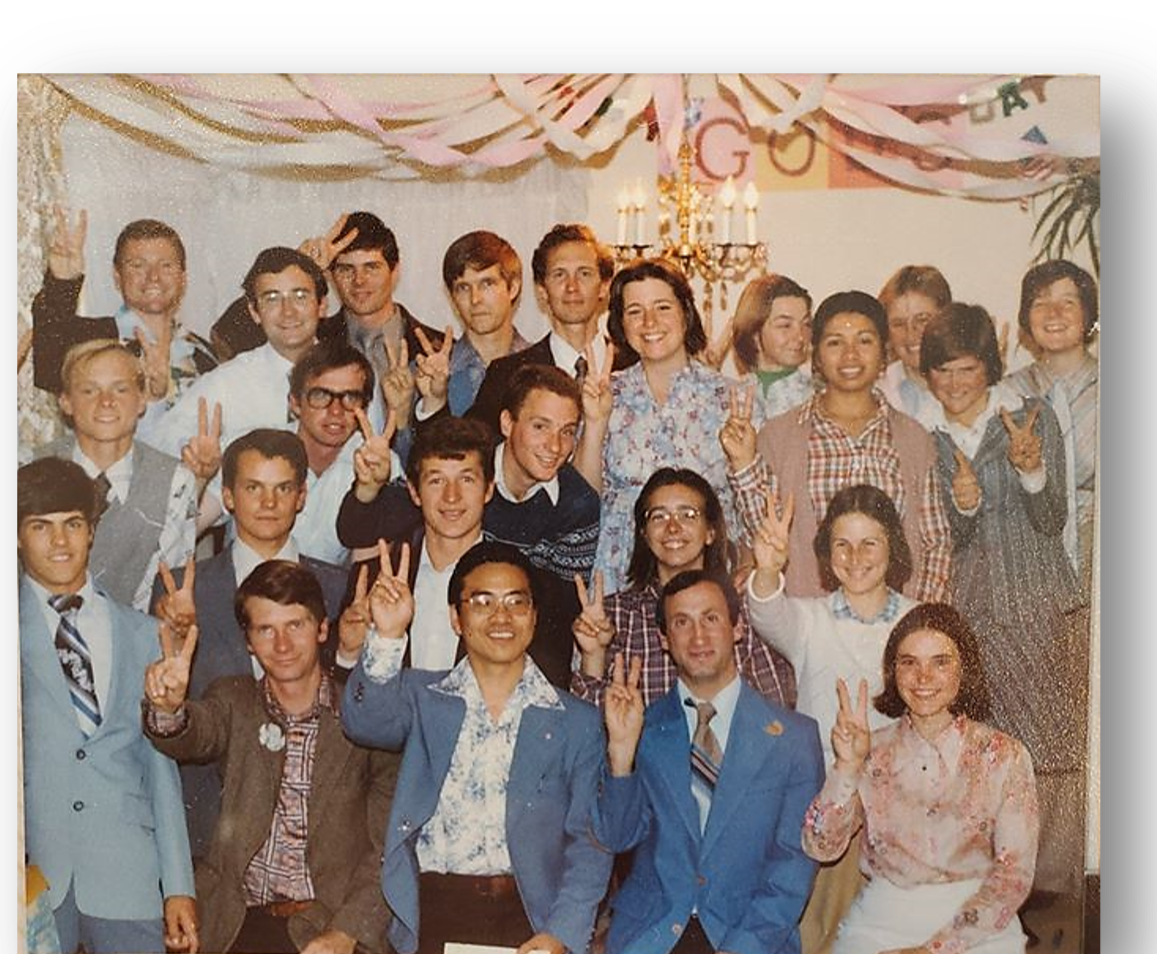
I was with the Oakland family for two months before 50 new members were bussed out to an MFT (Mobile Fundraising Team) workshop at Lake Tahoe, where Mr. Kamiyama assigned each member to an MFT center. In the workshop, we heard rumors of how hard MFT life was and that many members on MFT had left the church. My motivation since joining the church was: “We cannot betray the Messiah again like at the time of Jesus,” and I determined to face whatever may come. The reality was that Father’s MFT training gave me the strength to follow Him despite my foibles. I remember my commander once telling me that I was once of the 3 members he was most worried about possibly leaving!
I am grateful to God and True Father for guiding me, and to my Anabaptist ancestors who loved Jesus with their lives. I am sure they made the conditions that led me to True Father and His lineage.
Meeting True Father at the matching ceremony
After close to 3½ years on MFT, we were told to prepare for the matching and Blessing. I followed instructions and on June 24, 1982, went to the matching ceremony in New York. It was the first time that I met True Father, who, for many hours that afternoon, was instructing us in preparation for the matching. I thought I was ready to accept any sister as my future wife, but when Father asked MFT captains to stand up, I felt, “If only I had done better on MFT and had become a captain, I could have stood up.” And when Father asked for those who wanted to be matched to a Korean, I raised my hand. My mind was unsettled with my own desires. After many hours, it was past midnight when I was called to stand up with MFT members. To settle my mind, I began chanting internally, “Let God’s will be done. Let God’s will be done.” Father called a Japanese sister up front and grasped the lapel of my suit and pushed me into the sister. I was happy Father had grabbed me, and took it to mean that I should stick with this sister, come rain or shine. We went to a small room to introduce ourselves, and we both felt that if this was Father’s choice for us that we would accept it.
We returned to the Grand Ballroom, bowed to True Parents, and signed a sheet accepting the matching. Thus began our journey to becoming a couple, parents and family attending Christ’s lineage on earth to build His Kingdom.