Menu
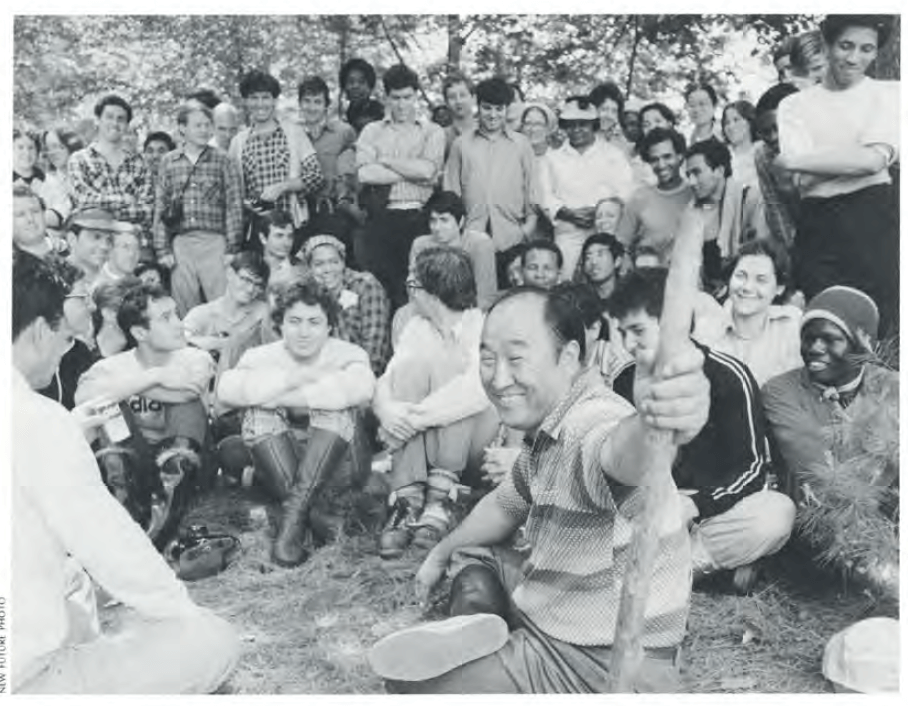
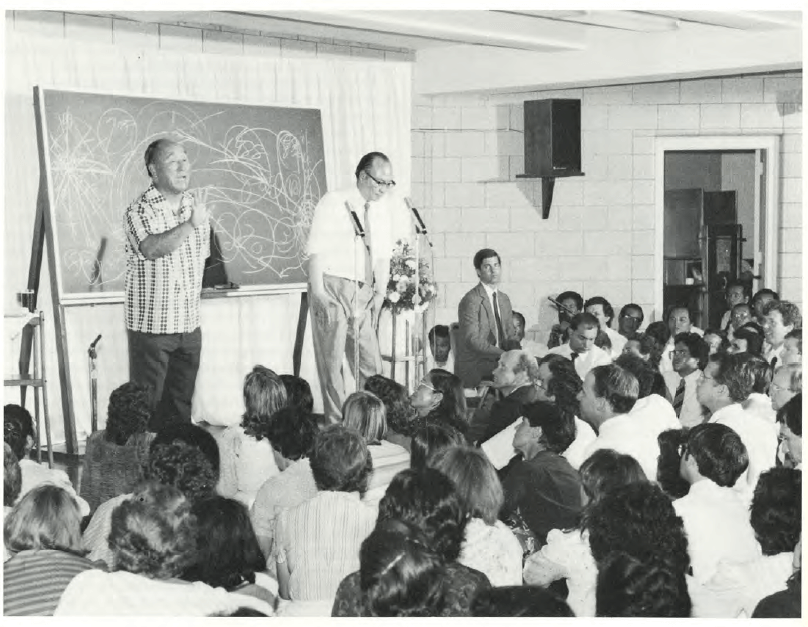
The "Day of Hope" lecture series commenced on February 3, 1972, at Alice Tully Hall in New York’s Lincoln Center, extending to seven key U.S. cities to promote the revival of traditional Judeo-Christian principles. By 1972, the Unification Church had established centers in ten states, and pioneer leaders were dispatched to the remaining forty states to set up new centers. That same year, evangelical groups traveled across states for a membership drive, drawing thousands of young individuals who embraced Rev. Moon’s teachings and committed to the Unification Church.
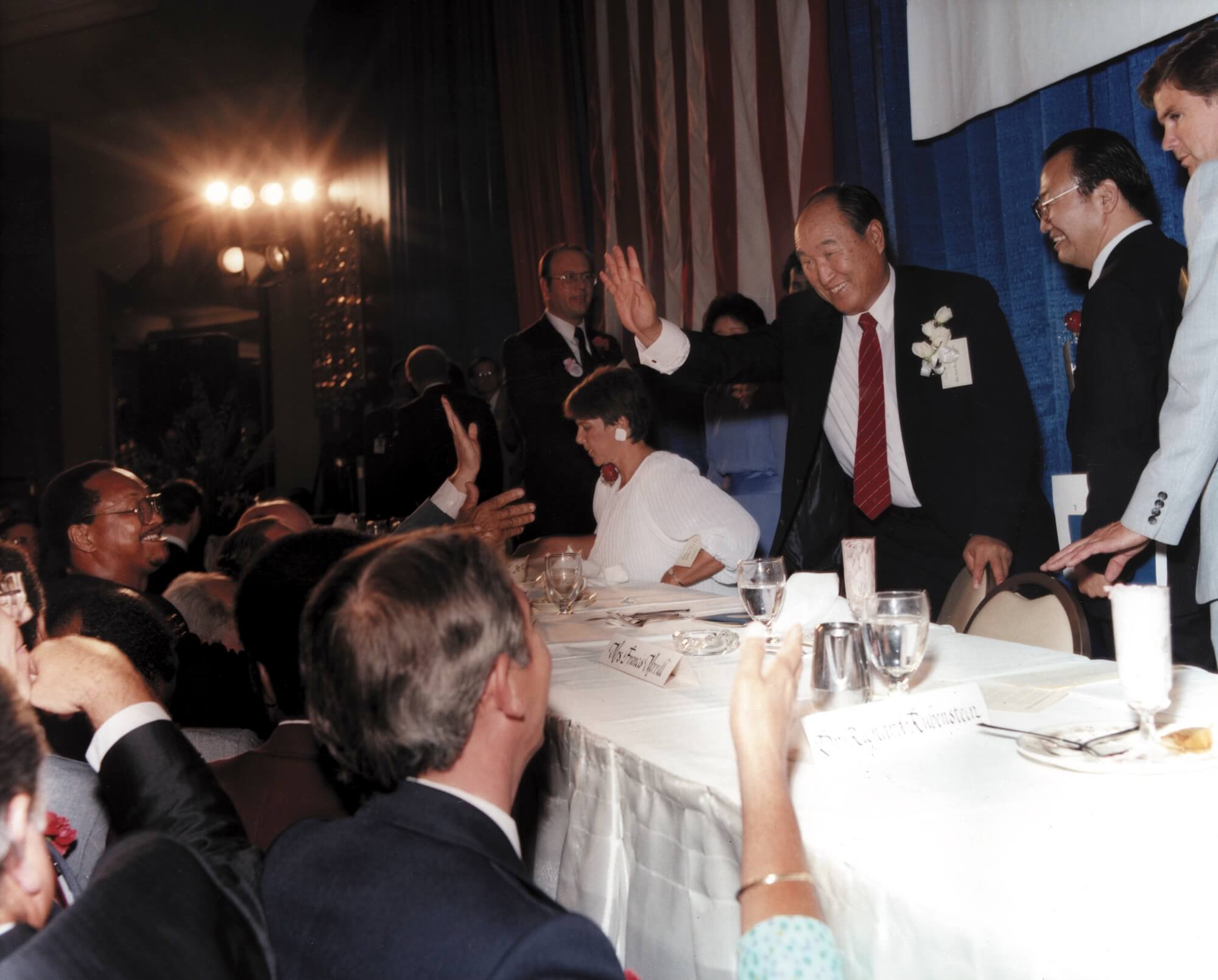
Following the triumph of the Madison Square Garden event on September 18, 1973, Rev. Moon delivered speeches and hosted banquets for thousands of societal leaders across all 50 states. During the 1974 Watergate crisis, Rev. Moon met with President Richard Nixon and, through public rallies and newspaper statements, called for Americans to forgive Nixon, advocating a message of "forgive, love, and unite." This stance, defying conventional public relations advice, was rooted in his belief in divine guidance and the need to preserve the American presidency amid the communist threat. However, his appeal was met with widespread criticism.
The Unification Church grew rapidly in the U.S. in the early 1970s. Initially, Rev. Moon’s call for Christian renewal was well-received, but in 1974, media hostility surged due to his support of anti-communist Richard Nixon. Fair reporting gave way to negative portrayals, with unfounded allegations from Korea resurfacing. The enthusiasm of his young followers was mischaracterized as “brainwashing,” and Rev. Moon was depicted as a religious autocrat or foreign agent.
By May 1975, with churches already established in Korea, Japan, North America, and Western Europe, Rev. Moon sent missionary teams—each including one Japanese, one American, and one German—to nations in Asia, Africa, the Middle East, Latin America, and Oceania, expanding the church’s presence to 120 countries.

Rev. Moon continued his Day of Hope tour with a Global Team of young followers from America, Europe, and Asia, delivering speeches in Japan and Korea. The tour culminated in a massive rally on Yoido Island near Seoul, attended by 1.2 million people. There, during the Cold War’s heightened tensions between North and South Korea, Rev. Moon delivered a resolute message against communism and supporting the establishment of a God-centered world.
In 1975, the Unification Theological Seminary was founded in Barrytown, New York, offering Master’s Degrees in Divinity and Religious Education, and later a Doctorate of Ministry. As an ecumenical institution, its faculty represented diverse denominations, and its curriculum covered philosophy, psychology, world religions, homiletics, and the histories and scriptures of Judaism, Christianity, Islam, and other faiths, in addition to Unification theology.

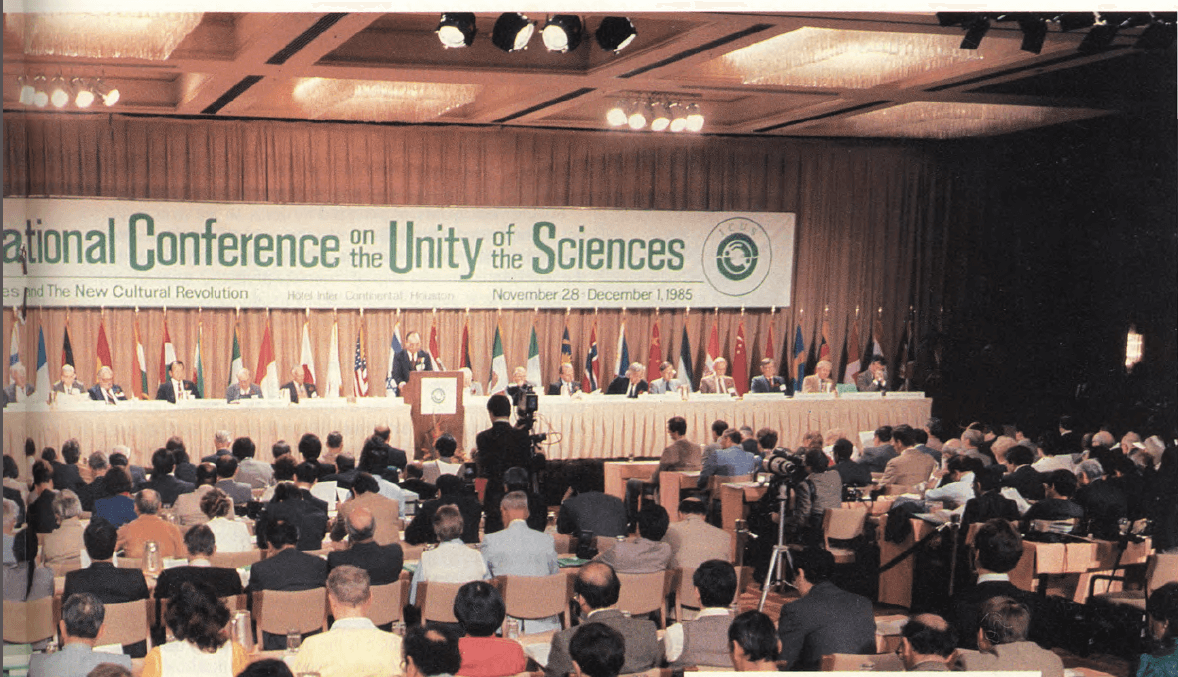
Through initiatives like the Unification Theological Seminary dialogues, the New Ecumenical Research Association for Christian Unity, and the Assembly of the World’s Religions in 1985—attended by 1,000 prominent religious leaders and scholars—Rev. Moon fostered interfaith dialogue and cooperation to address global issues like poverty, war, injustice, and family breakdown. He believed religious leaders working together inter-religiously offered the best solutions to these challenges, surpassing purely political or economic efforts.
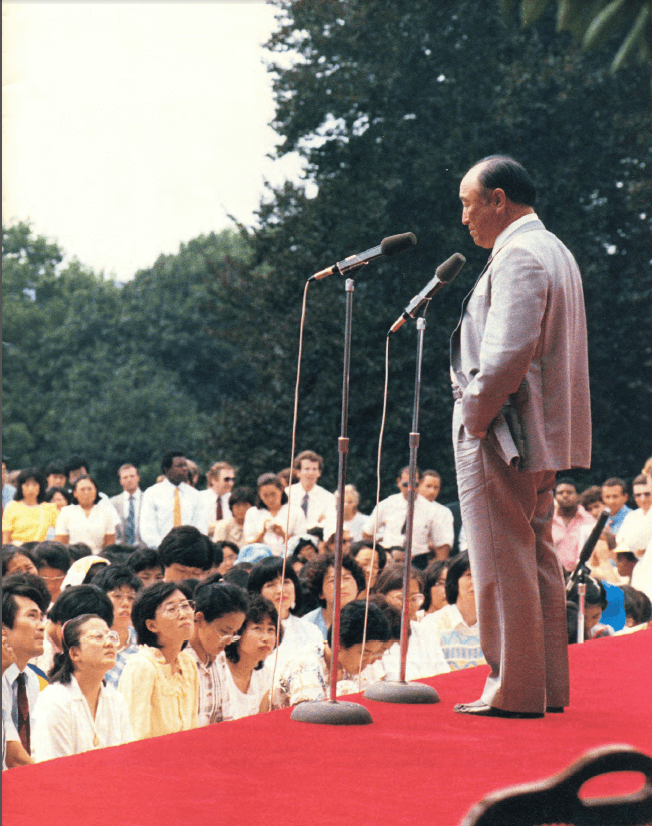
On September 18, 1976, an estimated 300,000 people of diverse backgrounds gathered at the Washington Monument for the "God Bless America Festival," the largest religious rally in Washington, D.C.’s history. Rev. Moon urged America to realize its destiny as one nation under God and to build "one world under God." Positioning himself as a “doctor” or “firefighter,” he aimed to help America confront its third great test—God-denying communism—and restore its spiritual heritage. He declared the Unification Church’s God-centered ideology could awaken America and establish it as a model nation.
In 1978, Rev. Moon summoned members worldwide to England, providing daily guidance and launching the “home church” initiative. He instructed members to serve communities of 360 homes, exemplifying God’s love through grassroots service.

Under pressure from politicians capitalizing on negative media coverage, the U.S. government initiated extensive investigations of Rev. Moon, involving nearly twenty federal agencies. Congressional hearings warned of the dangers of new religious movements. A five-year IRS investigation culminated in a 1981 indictment accusing Rev. Moon of tax evasion from nearly a decade prior, involving less than $8,000.
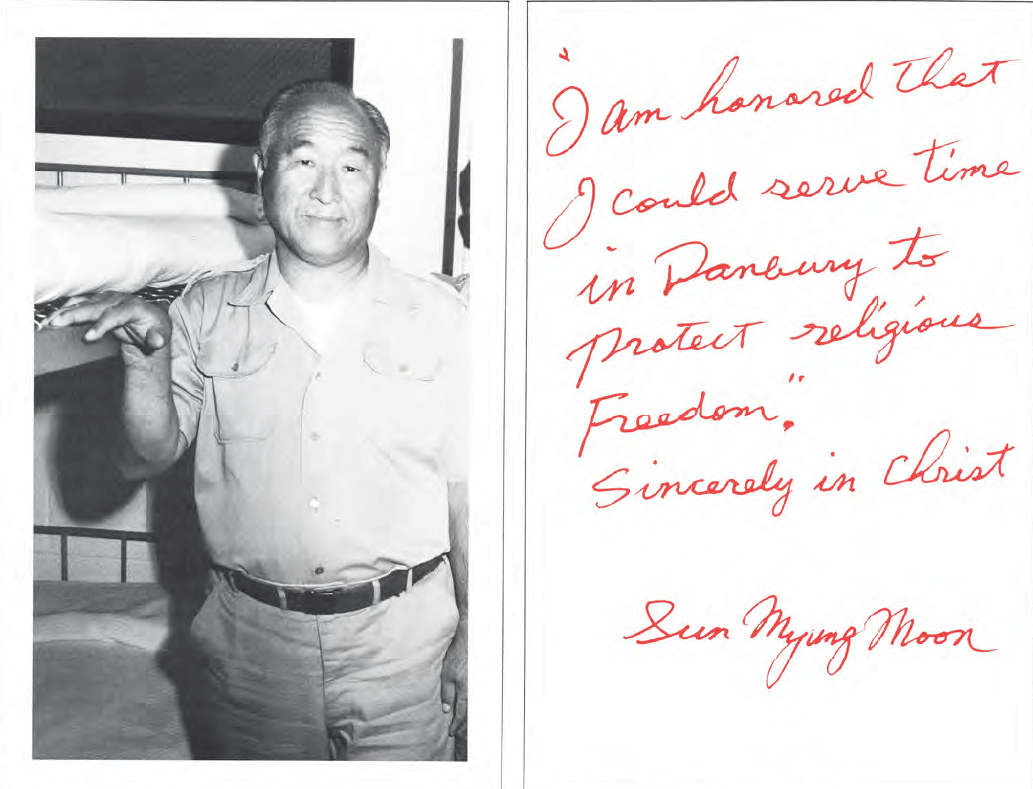
While in Korea when the indictment was issued, Rev. Moon was advised by his lawyers to stay, citing the lack of an extradition treaty. However, he returned to the U.S., stating, “I will not abandon my mission in America.” At his Federal District Court arraignment in New York, he declared, “Your Honor, I am not guilty.” Despite support from forty amicus briefs by Christian leaders, legal groups, and state governments, the Supreme Court declined to hear his case, and he was convicted, sentenced to 18 months in prison.

The Justice Department offered to waive his sentence if he left the U.S. permanently, but Rev. Moon refused, saying, “It must be God’s will that I go to prison.” Having endured imprisonment in North Korea and South Korea, he saw a divine purpose in this trial. Nationwide protests decried the injustice, and Christian and non-religious groups, representing over 160 million Americans, defended his religious freedom. A U.S. Senate Subcommittee report criticized the conviction, noting that Rev. Moon was unfairly targeted for practices common among religious leaders and that the case signaled intolerance for unpopular views.
On August 20, 1985, after serving 13 months, Rev. Moon was released. Christian and civil rights leaders, including Rev. Jerry Falwell and Rev. Joseph Lowery, held a press conference condemning his persecution and welcoming him back. During his trial, Rev. Moon founded The Washington Times on May 17, 1982, which became Washington, D.C.’s second-largest newspaper, aimed at countering communism and promoting family values and religion’s societal role.
In April 1990, Rev. Moon organized a Moscow conference with media leaders and former heads of state, fulfilling a 1976 pledge to hold a “great rally for God in Moscow.” Meeting Soviet President Mikhail Gorbachev, he urged the Soviet people toward God through interviews. Despite opposing communism, he expressed love for its people and supported former communist nations’ transitions to democracy.
In 1991, Rev. Moon advanced peace efforts by traveling to North Korea, meeting President Kim Il Sung—under whose regime he had been tortured—and seeking reconciliation between North and South Korea. Kim graciously welcomed Rev. and Mrs. Moon, who also visited his hometown, honoring his parents’ graves and reuniting with relatives.